0
About
No items found.
Speak with us
Lorem ipsum dolor sit amet, consectetur adipiscing elit. Suspendisse varius enim in eros elementum tristique. Duis cursus, mi quis viverra ornare
View all fees
DriversPressRA WorkshopContact
0
Thinking about taking a Porsche race car out on track? You're in the right place. In this guide, the ACI Motorsports team breaks down why Porsche consistently tops the list for track day drivers — from the raw performance of the 911 GT3 Cup to the balanced, accessible feel of the 718 Cayman GT4 RS.

Let’s be honest, if you’ve ever stood at the edge of a race circuit watching cars blast past, you’ve wondered what it would feel like to be behind the wheel. And if you’ve started researching track day cars, you’ve probably already noticed one name keeps showing up at the top of every list: Porsche.
That’s not an accident.
Track days aren’t just about horsepower. They’re about trust, trusting that when you brake late into a corner or push harder than you have before, the car is going to respond exactly the way you need it to. Porsche has spent over six decades earning that trust, and it shows in every lap you turn in one of their race cars.
At ACI Motorsports, Porsche is what we do. We race them, prep them, coach drivers in them, and know these machines inside and out. So if you’re trying to figure out whether a Porsche race car is the right call for your next track day, keep reading. We’re going to break it all down.
There are a lot of cars you can take to a track day. Stripped-out street cars, converted coupes, borrowed club racers. But if you want to understand what a purpose-built track car actually feels like, nothing in this price range comes close to what Porsche has built.
The 911 GT3 Cup isn’t a road car that’s been modified for the track. It’s built as a race car from day one, same 4.0-liter naturally aspirated flat-six as the road-going GT3, but tuned, strengthened, and dialed in for sustained high-performance driving at circuit speeds. Over 450 horsepower, exceptional aerodynamic downforce, and braking that inspires genuine confidence. Yet despite all of that, it’s a car that a driver with limited track experience can get into and feel genuinely in control.
That combination, serious performance and genuine accessibility, is what sets Porsche apart. Most cars at this level demand that you already know what you’re doing. A Porsche helps you figure it out.
Ask any experienced racer about the 911’s rear-engine layout, and you’ll get one of two reactions: deep respect, or a story about the time they learned to respect it. Once you understand it, though, it becomes one of the biggest advantages you can have on a track day.
With the engine sitting behind the rear axle, the 911 loads up the rear tires in a way that generates traction most front-engine cars can only dream of. Coming out of a corner, you can get on the throttle earlier, feel the rear end hook up, and drive cleanly onto the straight. It rewards drivers who commit. The more confidently you drive a 911 GT3 Cup, the faster it goes. That’s a rare quality in any performance car.
The 718 Cayman GT4 RS works differently but just as effectively. A near-perfect 50/50 weight distribution and the same 4.0-liter flat-six give you a car that’s balanced, neutral, and incredibly communicative. It’s probably the more intuitive starting point for drivers who are newer to track driving, but it has more than enough depth to challenge experienced drivers, too. There’s a reason both of these cars show up in some of the most competitive racing series in North America.
Here’s what makes the performance package complete on both platforms:
Natural Aspiration - No turbo lag, no waiting. Throttle response is immediate and linear, which means you’re always in precise control of what the rear tires are doing.
PDK Gearbox - Shifts happen in milliseconds via paddle. You stay focused on your braking points and your lines rather than wrestling with a manual gearbox.
Race-Spec Braking - Whether it’s carbon ceramic or steel race brakes, these setups are built to perform lap after lap without fade. You’ll never reach the end of a track day wishing you had more stopping power.
Integrated Data Logging - This one matters more than people realize. Factory data systems mean every lap is recorded, every braking point is visible, and every coaching session has real numbers to work from.
Here’s something that doesn’t get talked about enough in the track day world: a car that breaks down isn’t a track day car, it’s a tow truck magnet. Reliability isn’t just a nice-to-have, it’s the whole ballgame.
Porsche Motorsport builds its Cup cars to race hard, across long seasons, on circuits all over the world. The 911 GT3 Cup is the centerpiece of the Porsche Carrera Cup championships run on five continents. Those cars live a brutal life, and they’re engineered to handle it without complaint.
What that means practically for a track day driver is straightforward: standardized components, predictable service intervals, and a global parts network that means you’re never hunting down obscure parts. When you pull into the paddock on track day morning, the car is ready to go. Full stop.
The reliability case breaks down like this: factory-built engines with documented service histories and full manufacturer support, spec-series components shared across Carrera Cup and Sprint Challenge fleets, a worldwide parts network that keeps things moving even mid-season, motorsport-grade materials that are designed for repeated extreme heat cycles, and a platform that has proven itself in thousands of race starts every single year.
If you’re trying to decide which Porsche race car makes sense for you, here’s the honest breakdown.
The 911 GT3 Cup is the top-shelf option. Over 450 horsepower, rear-engine rear-wheel drive, and a pedigree that comes straight from the Porsche Carrera Cup North America, one of the most competitive one-make series in the country. It’s the car for drivers who already have some track experience and want to find out how fast they can really go. It demands respect, and it rewards it.
The 718 Cayman GT4 RS is where most drivers start with us, and where a lot of experienced drivers choose to stay. At 425 horsepower with that mid-engine balance, it’s a more forgiving car to learn in, but it’s every bit as serious a machine. It competes in the Porsche Sprint Challenge North America and SRO GT4 America, which tells you everything you need to know about its capability.
Both cars are available through ACI Motorsports’ arrive-and-drive programs. That means you don’t need to own the car, worry about transportation, or show up with a trailer and a toolbox. You arrive, you get in, and you drive. We handle everything else.
The car is only part of the story. What really determines whether you have an incredible track day or a frustrating one is the team around you.
ACI Motorsports was built on the belief that every driver deserves professional-grade support, not just the guys chasing championships. We’re headquartered in Chattanooga, Tennessee, with operations at Road Atlanta in Georgia, and we compete across four of North America’s most prestigious racing series: Porsche Carrera Cup North America, Porsche Sprint Challenge North America, SRO GT4 America, and SRO GT World Challenge America.
The team that supports our pro drivers is the same team that supports our arrive-and-drive clients. Same engineers, same mechanics, same attention to detail. When you come out with ACI, you’re not renting a race car. You’re joining a racing operation.
If a Porsche track day has been on your radar, there’s no better time to make it happen. Whether you want a single unforgettable session, a full arrive-and-drive program, or you’re seriously thinking about racing competitively, ACI Motorsports has the team, the cars, and the experience to make it real.
Reach out to us today. Tell us where you’re at, what you’re looking for, and we’ll put together the right program for you. We’d love to have you in the paddock.
Join ACI Motorsport and be part of a championship-winning team competing in some of North America’s most competitive racing series.
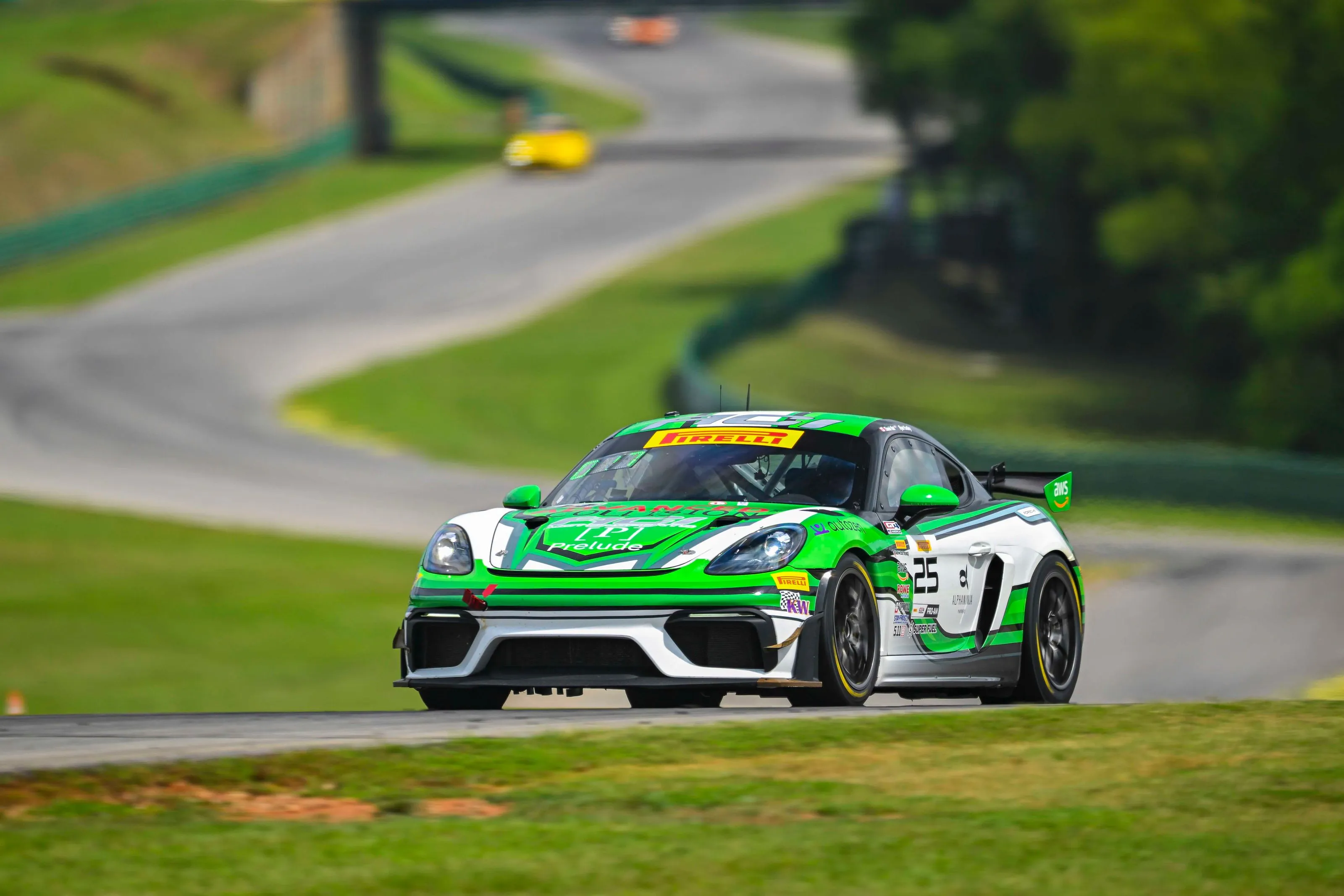
CI Motorsports takes race car preparation beyond a basic checklist, applying professional-level inspection, chassis tuning, and data-driven setup work to every Porsche GT4 before competition. From mechanical checks and suspension geometry through to trackside engineering support on race day, here is a full breakdown of how the team keeps its cars race-ready.
Sponsoring ACI offers racing fans a unique opportunity to connect with the sport on a deeper level. It allows them to be part of the action, supporting the teams and drivers they admire while gaining exclusive access to events and behind-the-scenes experiences.
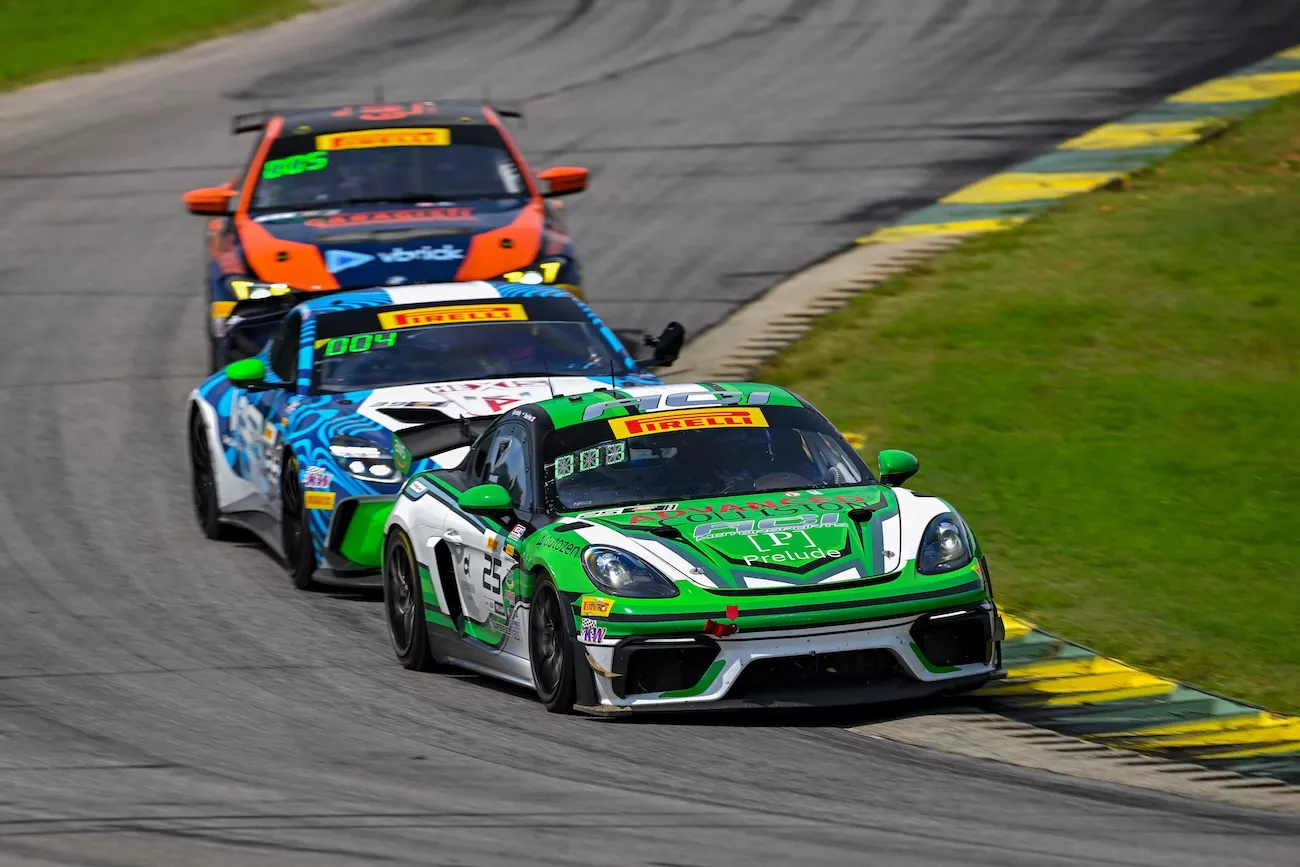

Door-to-door racing with factory-built GT4 machines—pro and amateur drivers battle it out in high-stakes sprint and endurance races.
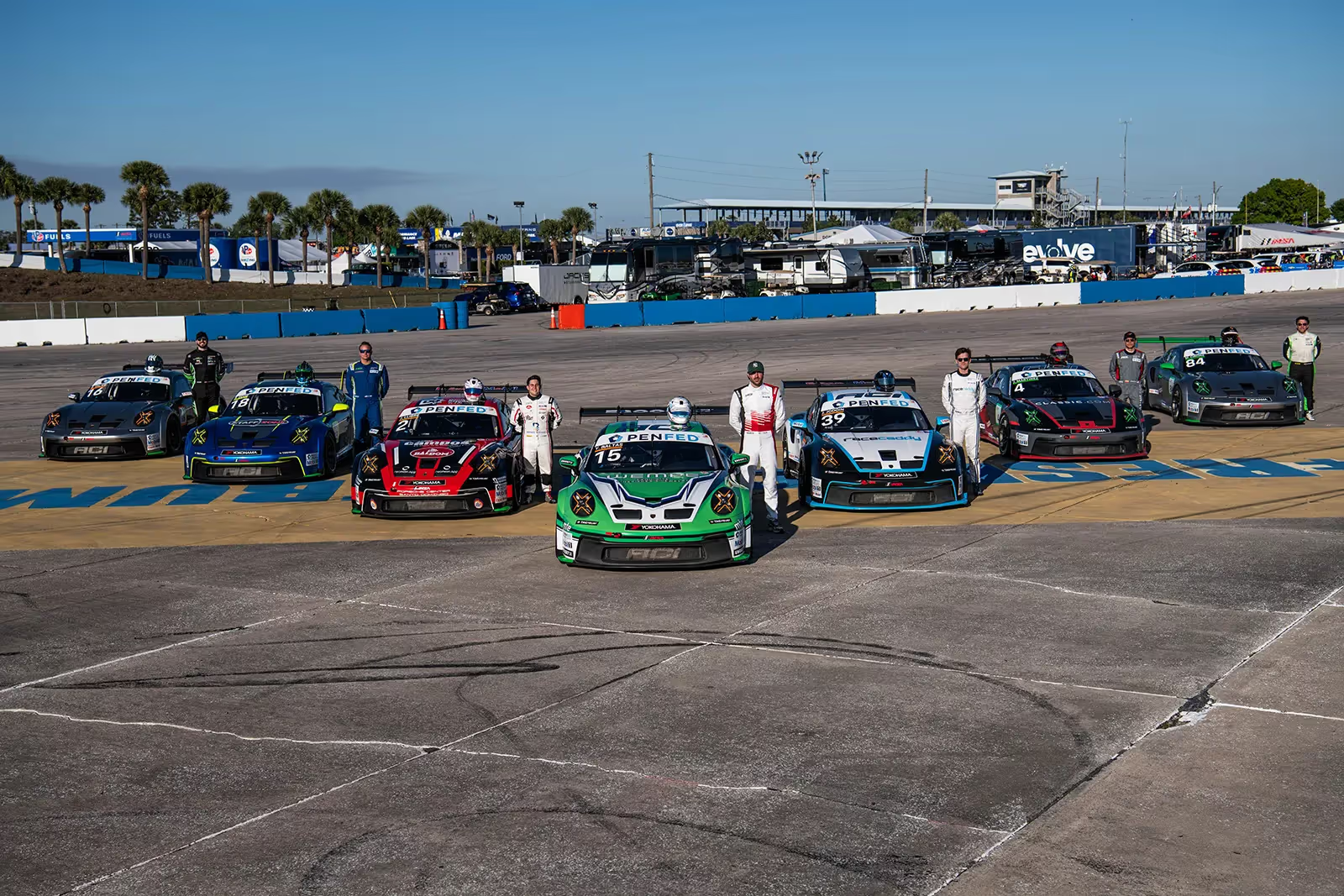

One make. One mission. Identical Porsche 911 GT3 Cup cars, flat-out racing, and rising stars chasing the next level.
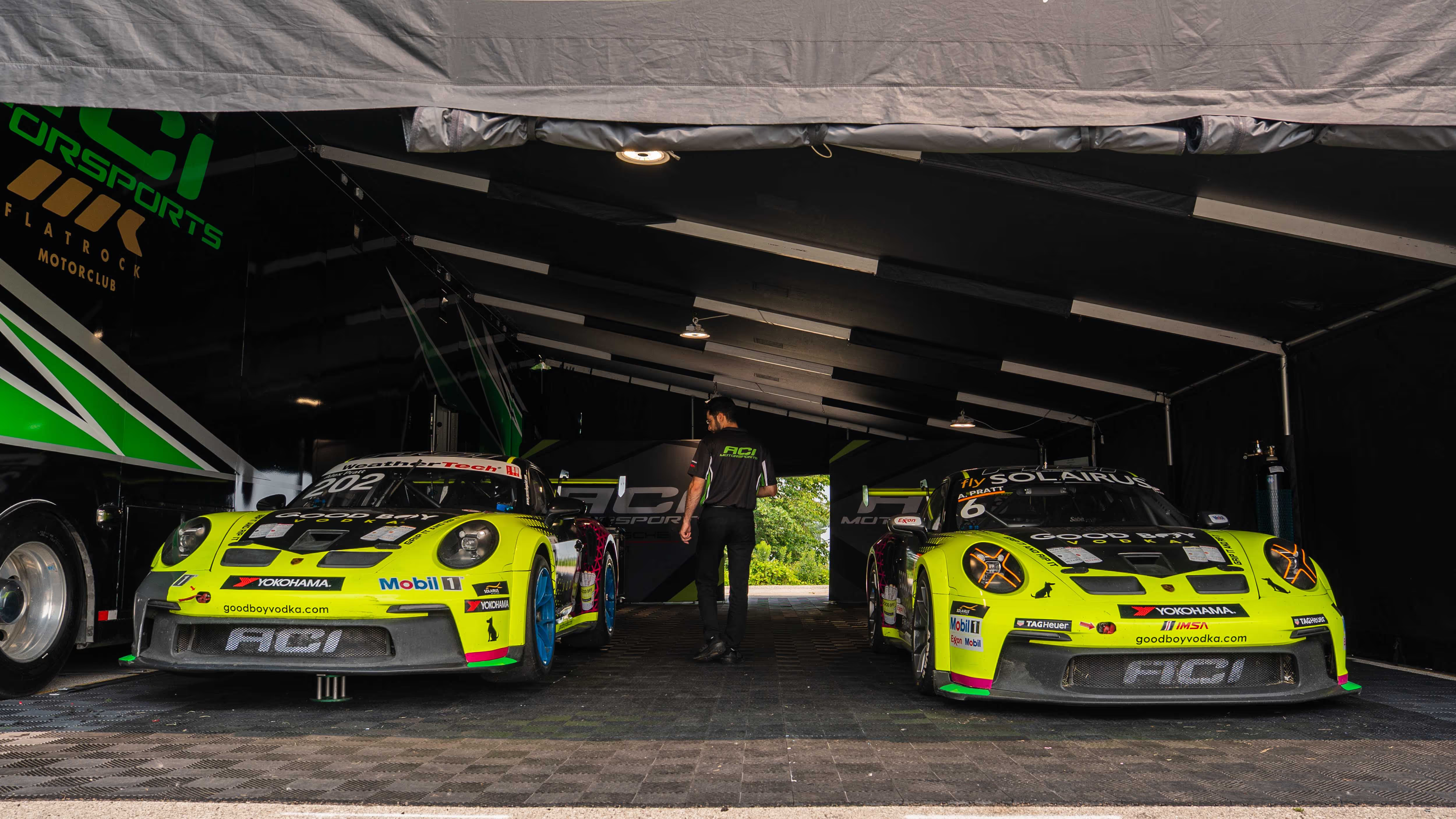

The proving ground for Porsche talent—accessible, competitive racing in 718 Cayman and 911 GT3 Cup cars.
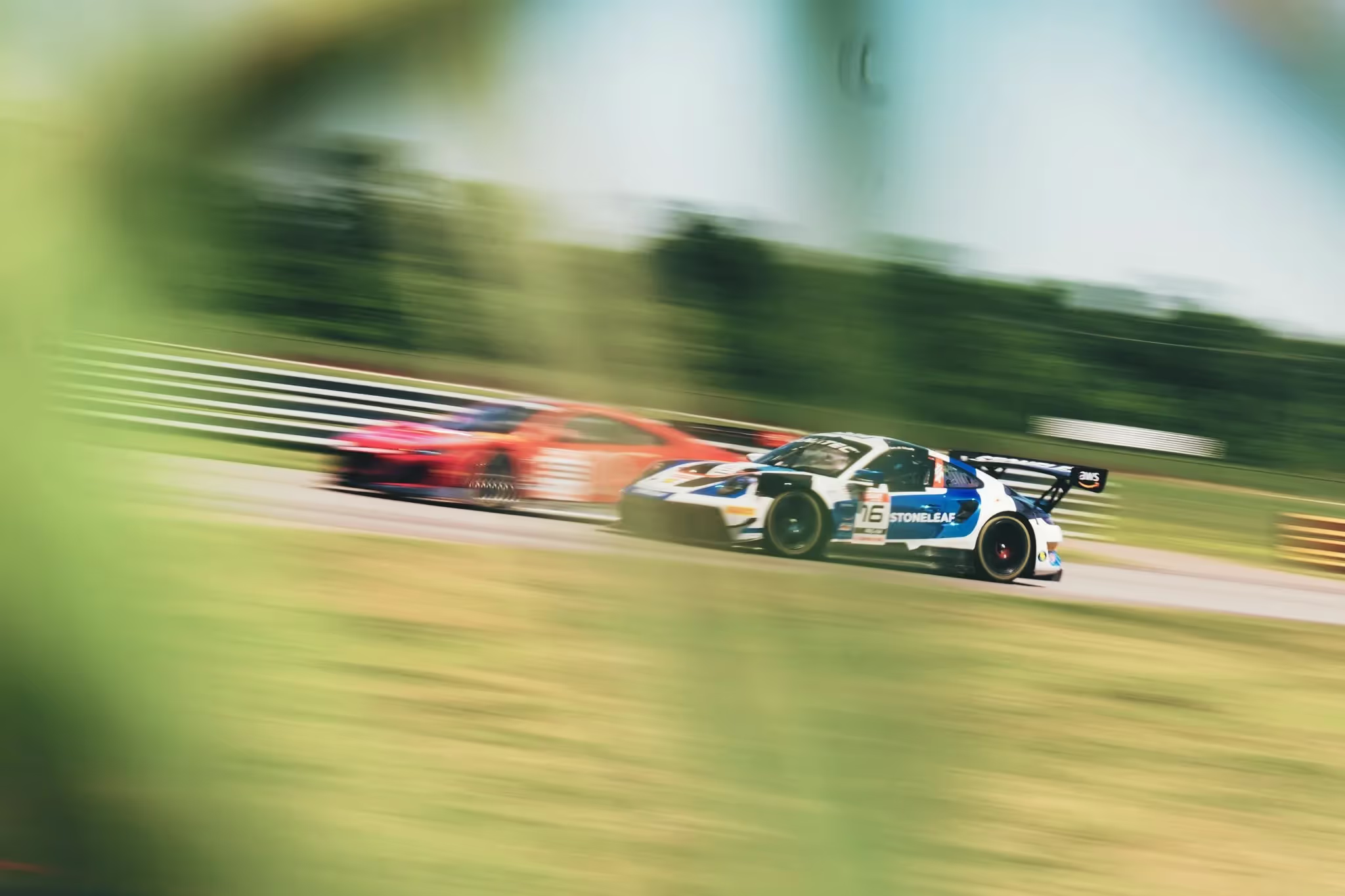

World-class GT3 racing at its finest—top teams, pro drivers, and pure speed across North America’s best tracks.